Aleksander Tansman Quartet
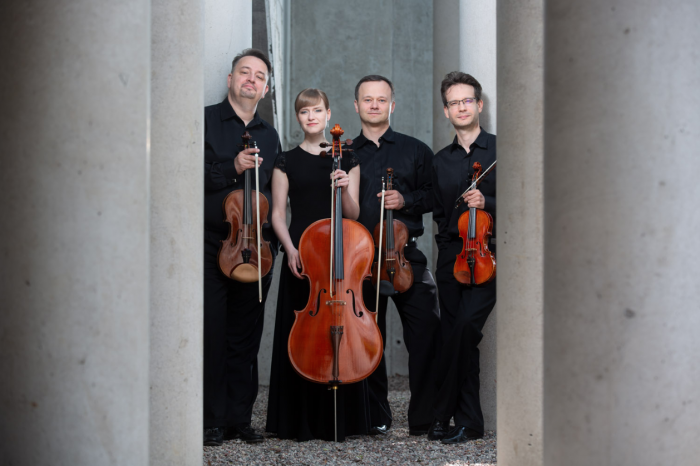
The Aleksander Tansman Quartet, composed of Rafał Dudzik – 1st violin, Stanisław Gadzina – 2nd violin, Jakub Grabe-Zaremba – viola, and Joanna Dudzik – cello, was formed in 2008 at the initiative of the concertmasters of the Podlasie Opera and Philharmonic Orchestra – European Arts Centre in Białystok. For 10 years, the artists have been promoting chamber music, combining the gems of the quartet repertoire with works by lesser-known or forgotten composers, with particular emphasis on the compositions of their patron – the eminent Polish composer Aleksander Tansman. The members of the Quartet are graduates of renowned music academies in Poland and abroad, where they studied under the supervision of eminent professors: T. Gadzina, J. Jakimowicz-Jakowicz, I. Wojciechowska, W. Promiński, I. Albrecht, H. Beyerle, and A. Zieliński. To hone their craft, they have participated in master classes led by world-class artists and educators, including M. Jaszwili, T. Tomaszewski, P. Janowski, R. Staar, P. de Clerck, H. Kobayashi, C. Lelong, H. Rohde, F. Schwartz, J. Diesselhorst, C. Ilea, F. Peticelli, the Camerata Quartet, and the Philharmonia Quartett Berlin. The Quartet collaborates with leading Polish and international musicians, including Professor Tomasz Strahl and Kevin Kenner (USA). The ensemble has performed at prestigious festivals, including the Laboratory of Contemporary Music and Sanus per Artem. It has also performed at the invitation of the Senate of the Republic of Poland in Moldova and at the Presidential Palace in Malta.
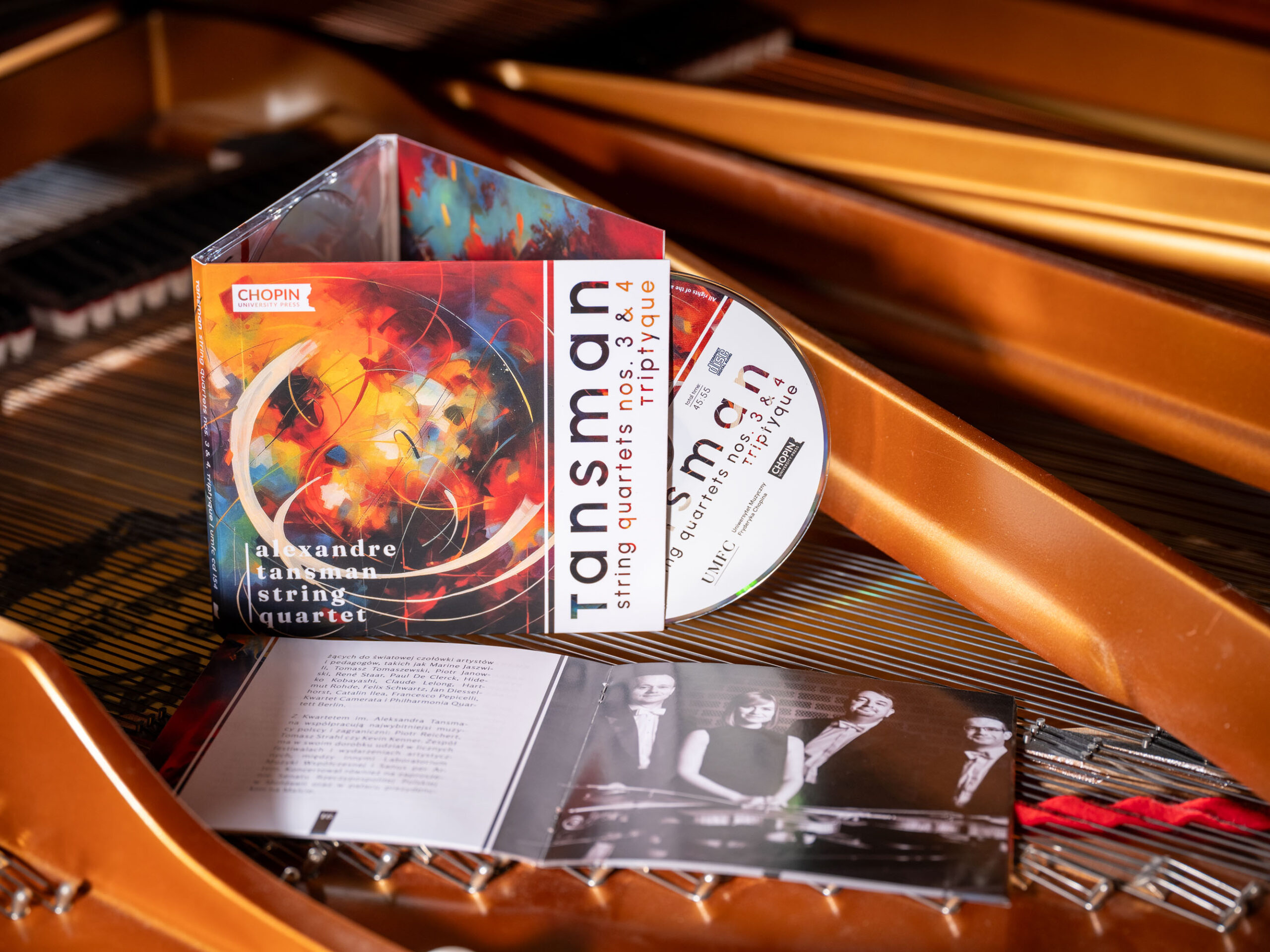
In January 2024, the ensemble released a CD: Alexandre Tansman: String Quartets nos. 3&4, Triptyque (published by Chopin University Press).
Tansman’s exceptionally rich compositional legacy encompasses a wide spectrum of forms and genres of instrumental, vocal-instrumental, and stage music, excluding sacred music. Stylistically and aesthetically, this work is fully representative of the French neoclassicism in 20th-century music. […] In the field of chamber music, encompassing nearly thirty works for various instrumental ensembles, the string quartet occupies a prominent place, considered by the composer himself to be the purest musical form: “You can’t cheat in a quartet,” he used to say. Tansman composed nine pieces representing this genre, written over the course of his forty-year creative career. The three compositions recorded on the album date from the early period, namely 1925, 1930, and 1935. They are related both stylistically and expressively, and represent the composer’s nod to the genre’s nearly two-century-old tradition. (Tomasz Baranowski; description from the UMFC website).